Guides · Updated 7 September 2026
Revolut portfolio tracker: the brokerage statement, the crypto export, and one dashboard
Revolut Invest writes two exports that share no column name — the brokerage account statement and the crypto transactions file — and a tracker has to read both to show what you actually own. Fortunest reads them separately and lands them under one Revolut account, and it is our pick. Sharesight documents a Revolut upload; Portfolio Performance, Ghostfolio and getquin take a generic file.
The short answer
- There are two files, not one. The brokerage statement covers shares and ETFs; Revolut's crypto wallet writes its own seven-column export. Upload only the first and your coins are missing; upload only the second and your shares are.
- Our pick: Fortunest — it recognises the two formats separately, files them under the same Revolut account, reconstructs cash from top-ups, withdrawals, trades and dividends, and reads euro-locale statements with comma decimals. Free without an account; Pro is €69 a year.
- Reports for an accountant: Sharesight — a documented Revolut route: export the statement, then upload it under the Revolut broker option. File upload only.
- Free and local: Portfolio Performance and Ghostfolio — a CSV wizard you map yourself, or a self-hosted service fed by CSV, JSON or REST. Neither names a Revolut template.
- Open banking or manual: getquin — its pages describe a broker login, manual entry and a CSV upload, and name no broker at all.
How to export your Revolut history
The wording below is the same as in the Revolut section of the docs. Do the brokerage statement first; the crypto export is a separate download in the Revolut app.
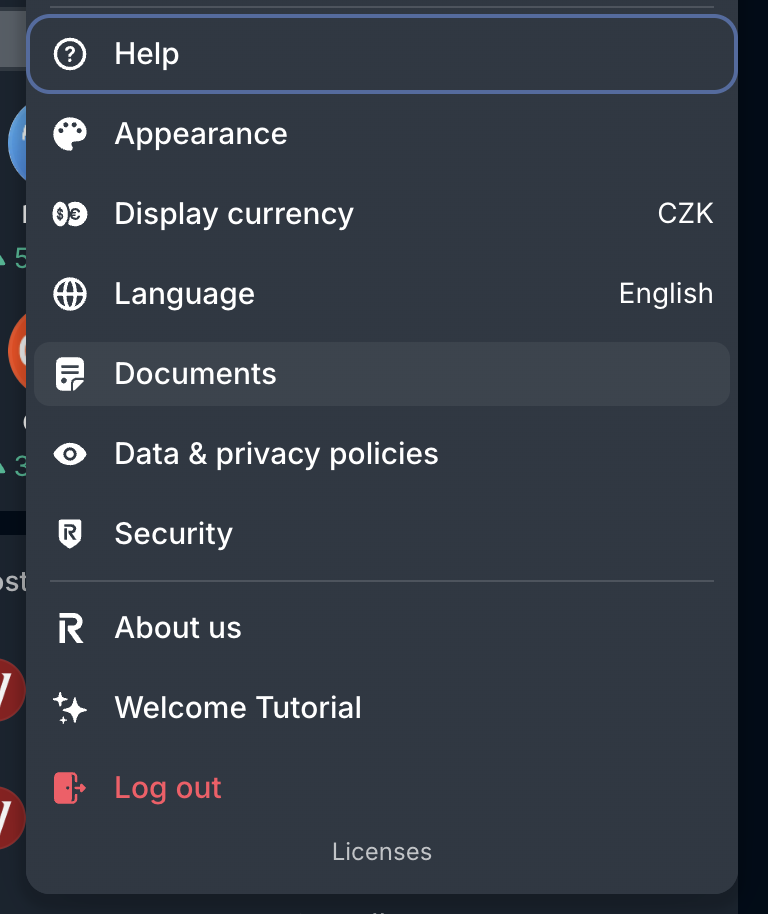
- Open your Documents On invest.revolut.com click your profile icon (top right) and choose Documents.
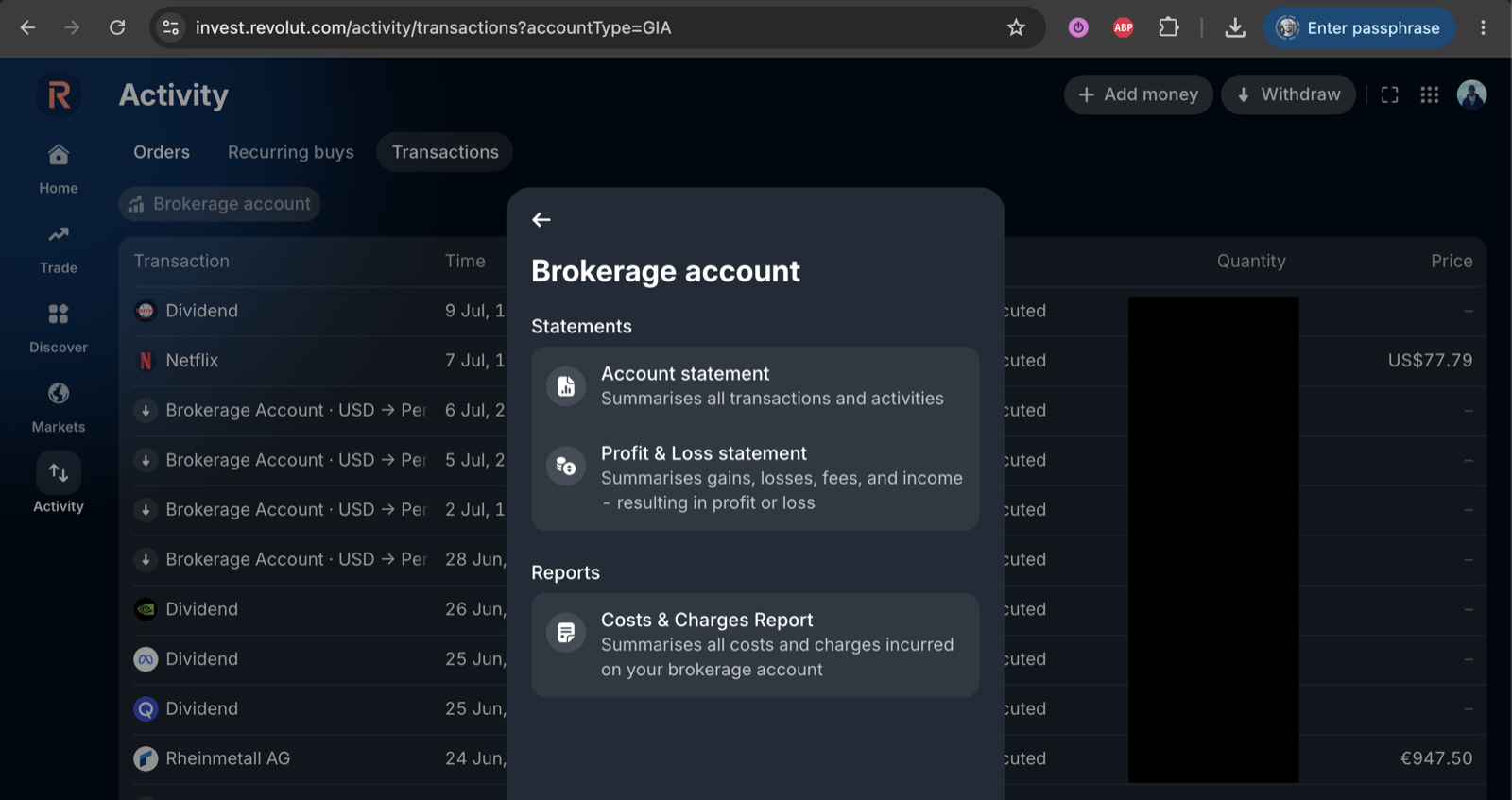
- Pick the brokerage account statement Select Brokerage account and choose Account statement under Statements.
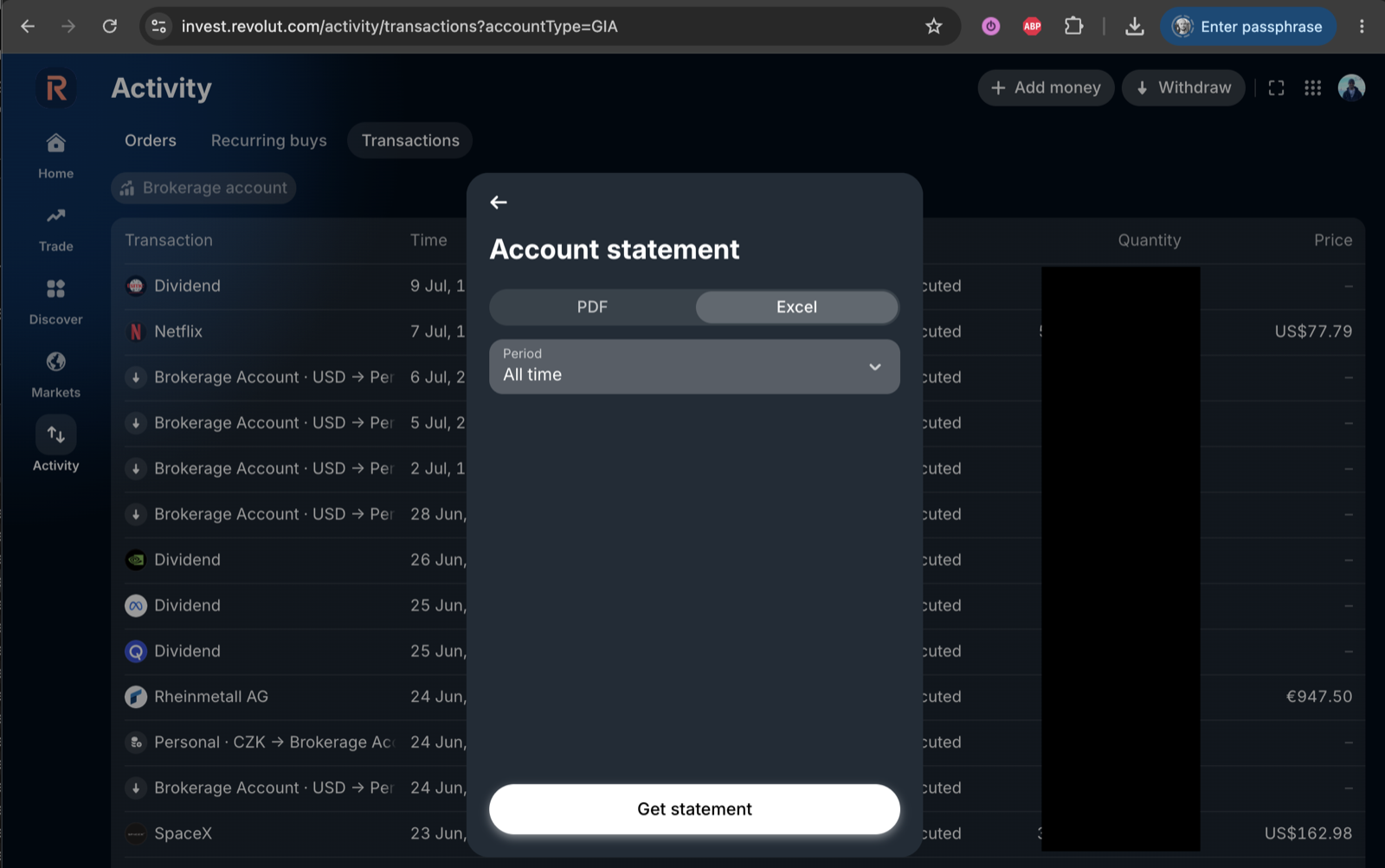
- Choose Excel, all time, get statement Then pick the Excel format (it downloads as CSV), set Period to All time and hit Get statement.
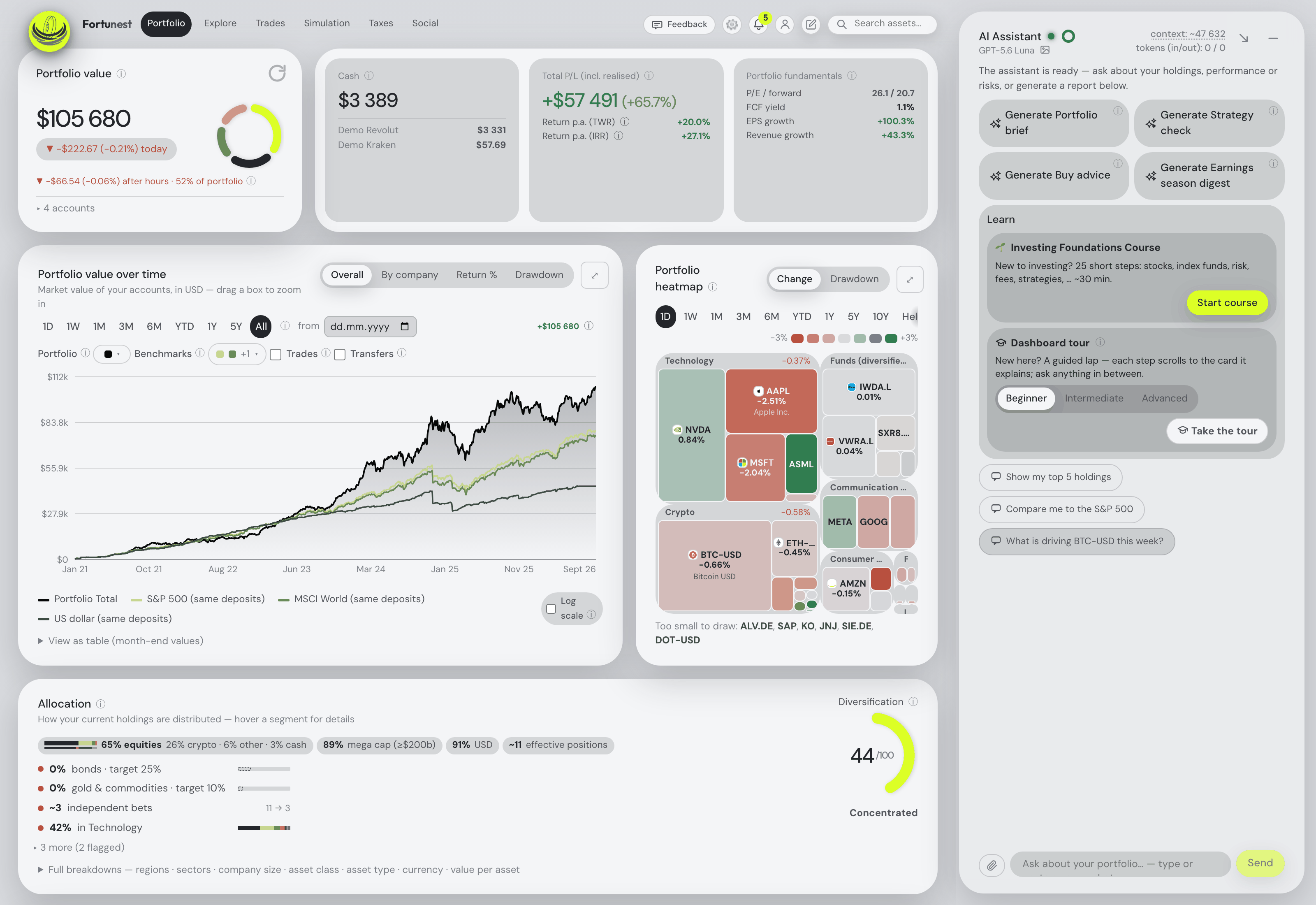
- Export the crypto transactions too, then drop both in Revolut's crypto wallet writes its own export — one row per buy, sell, send, receive or staking reward. Drag both files onto the Portfolio value tile in the app, or drop them in ⚙ Settings → Data; they are recognised separately and land under the same Revolut account.
What a tracker has to get right in these files
The statement is read for buys and sells, dividends, stock splits, custody fees, top-ups, withdrawals and transfers — and cash is reconstructed from them, because the file does not carry a running balance. A euro-locale statement mixes comma decimals with dollar amounts in the same row, which used to refuse the whole upload; numbers are now read cell by cell, and where one is genuinely ambiguous the row's own arithmetic settles it, with anything that cannot be settled counted in the import notes rather than coerced into a guess. One file can carry several currencies over its life — SEK early, EUR later — and each row keeps its own.
The crypto file is read for buys, sells, sends, receives and staking rewards. Stake and Unstake rows are read and then deliberately ignored: staking ETH does not change how much ETH you own, and crediting their quantity would invent coins on top of the purchase that acquired them. That single decision is the difference between a plausible crypto balance and a doubled one.
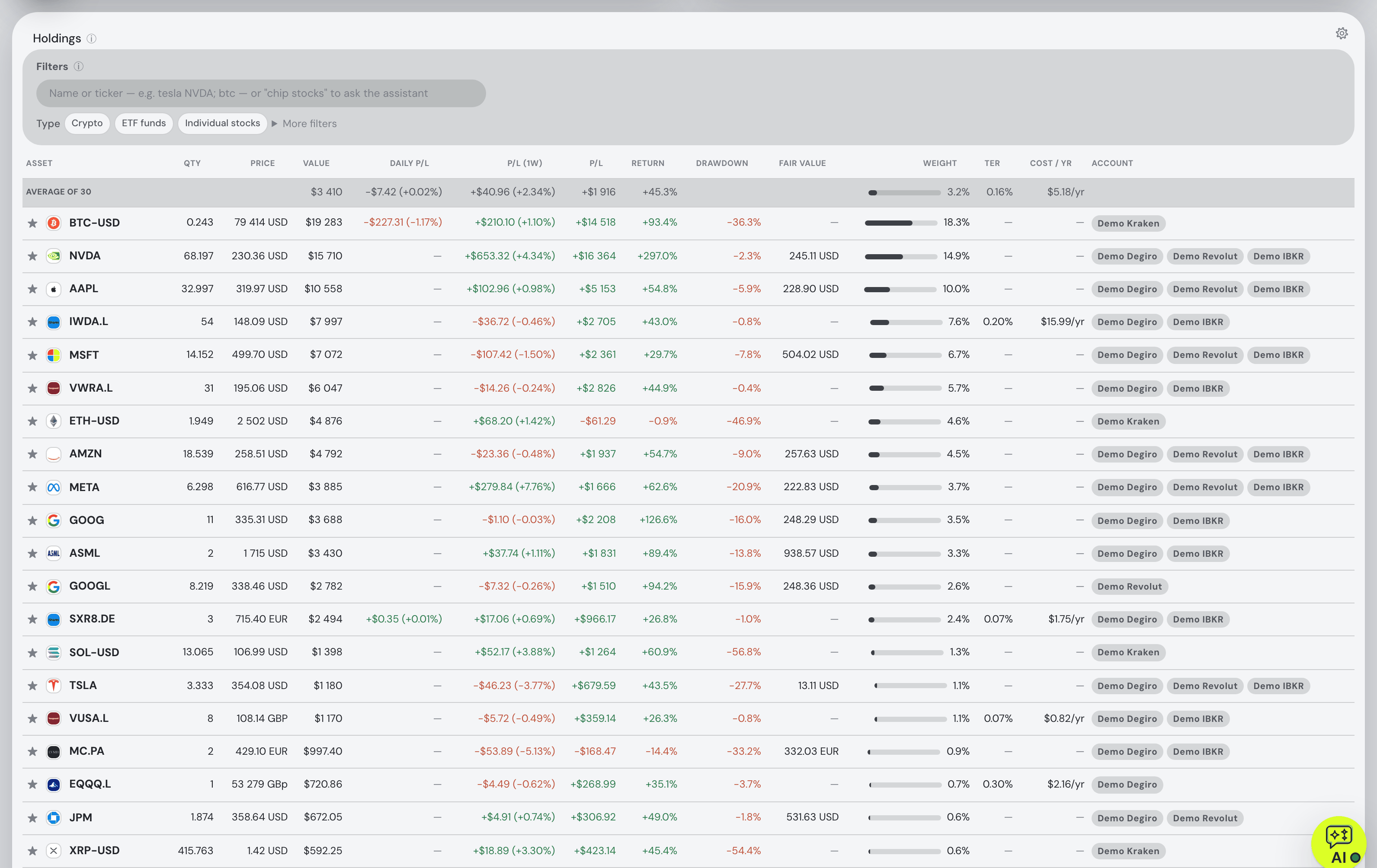
From there it is one portfolio. The Portfolio tab values every position live and split-correct, converts each day at that day's rate into whatever display currency you pick, and reports total P/L with realised gains, annualized TWR and money-weighted IRR against seven benchmarks fed your own deposits. Risk covers volatility, Sharpe, Sortino, beta, correlation and drawdowns; the holdings table carries weight, TER and an account badge per row. Add the exports of 28 other platforms or a read-only Kraken or Binance key and the transfers between your own accounts are matched. The assistant answers about the actual holdings and can drive the dashboard; on the Taxes tab (Pro) each sale is paired against the lots it consumed — orientation, not a filing.
The trackers that read a Revolut export
Each cell is what the vendor's own pages say, on the date in the footnote. Not described means the page does not mention it. A green ✓ marks whichever product leads a row on that row's own terms.
| Fortunest1 | Sharesight2 | Portfolio Performance3 | Ghostfolio4 | getquin5 | |
|---|---|---|---|---|---|
| How Revolut gets in |
|
|
|
|
|
| Revolut crypto |
|
|
|
|
|
| Cash and locales |
|
|
|
|
|
| Free plan |
|
|
|
|
|
| Paid from |
|
|
|
|
|
| Where your data lives |
|
|
|
|
|
| AI assistant |
|
|
|
|
|
Cells were checked against the sources below on 7 September 2026, except Portfolio Performance's product site, Ghostfolio, Sharesight's pricing and privacy pages and getquin's security page, checked 19 August 2026 as on our landing-page comparison. Prices are list prices before promotions and, for Fortunest, before VAT.
The verdicts
Fortunest — our pick
Best for: Revolut shares and Revolut crypto in one portfolio, with everything else you own beside them.
Free without an account · Pro €6.99/mo or €69/yr
Two files that share no column name are a format problem, and this is the tracker that treats it as one: the statement and the crypto export are detected separately and filed under the same Revolut account, cash is reconstructed rather than assumed, euro-locale numbers are read cell by cell, and staking rows are recognised and then deliberately ignored so no coins are invented. Shares and coins then share one currency, one set of benchmarks and one assistant that can read all of it.
Where it falls short: there is no Revolut connection, only the two exports, so you re-download them yourself; there is no native mobile app yet, only the web app built for phones; the Taxes tab is Pro and its rulebook defaults to the Czech rules with no per-country presets; and the Windows desktop build is not yet code-signed.
Portfolio Performance
Best for: free, open source, and a file that never leaves your disk.
Free — EPL 1.0
A desktop program for Windows, macOS and Linux with no account and no service behind it. The CSV wizard lets you set the delimiter and the decimal separator and map each column by hand — which is genuinely useful for a euro-locale Revolut statement — and it ships built-in configurations for some banks. Benchmarks against an index, volatility, semivariance and maximum drawdown are included.
Where it falls short: no Revolut template is named in its manual, so both files are yours to map, twice, and again when the export changes; the reconstructed-cash problem is yours as well; and there is no phone app, no projection, no tax report beyond tax and fees per transaction, and no assistant.
Ghostfolio
Best for: self-hosting the whole thing on your own server.
Self-hosted free — AGPL-3.0 · Cloud Premium from US$48/yr, one-time
Open source and built for Docker: run it on your own hardware and nothing leaves it, sign in with an anonymous token rather than an email, and feed it CSV, JSON or the REST API — the API being the sane route when two Revolut files need reshaping first. Benchmarks, an X-ray for cluster risk and fees, and a FIRE calculator are included, and there is an Android app.
Where it falls short: no broker connections at all, so every trade arrives by file or API and the Revolut parsing is yours to write; no in-app assistant beyond an experimental prompt you copy out; and the cloud free tier is a summary rather than the whole product.
getquin
Best for: a mostly-connected portfolio with a community attached, hosted in Germany.
Free €0 · Premium €89.99/yr · Wealth €149.99/yr
Three ways in are described: an open-banking login through getquin, manual entry "available for all brokers worldwide", and a CSV upload. The free plan advertises unlimited bank and broker connections, the data is stated to sit in Germany and Europe under AES-256, and there are apps on both phone platforms plus a feed where you follow other investors.
Where it falls short: Revolut is not named on its pages, so which of the three routes applies — and whether the crypto file is read at all — is something you learn after signing up; AI analysis starts at €89.99 a year; and risk metrics and tax reporting are not described.
How we compared
We read each vendor's own import, pricing and privacy pages rather than a review site, and where a page says nothing about a row, the cell says so. We build Fortunest, so we are not neutral: the table is meant to be checkable rather than impartial, and every product's limits are in its verdict, ours included.
Questions people ask
Does Revolut have an API for portfolio trackers?
Not one that any of these trackers use. In Fortunest, Revolut is on the CSV list rather than among its six direct API connections or the 22 brokers SnapTrade signs you into, so the statement you download yourself is the route. Sharesight documents file upload only for Revolut, with no API and no email route. Portfolio Performance and Ghostfolio take a generic CSV you shape yourself, and getquin describes open banking, manual entry and a CSV upload without naming a broker.
Are transfers between my Revolut and other accounts double-counted?
Not in Fortunest. Revolut's statement has no running cash balance, so cash is reconstructed from top-ups, withdrawals, trades and dividends, and moves between two of your own accounts are matched so the pair nets out rather than showing as a deposit and a withdrawal. Crypto sends and receives are read the same way. Stake and Unstake rows are read and then deliberately ignored, because staking ETH does not change how much ETH you own.
Can I track Revolut shares and Revolut crypto together?
Yes, and it takes two files. The brokerage statement and the crypto export share no column name, so they are recognised separately and then land under the same Revolut account. Shares, ETFs and coins end up in one holdings table in one display currency, converted at each day's real rate, with the same benchmarks, the same risk figures and the same assistant reading all of it. The stocks-and-crypto guide compares the alternatives.
Is there a free Revolut portfolio tracker?
Fortunest's free plan needs no account and no card and covers the whole dashboard, the assistant, three accounts and fifty assets — enough for the Revolut statement, the crypto file and one more broker. Portfolio Performance is free and open source, and Ghostfolio is free when you host it yourself. getquin has a free plan. Sharesight's free tier stops at ten holdings and one portfolio. More in the free trackers guide.
Sources
- Fortunest — the Revolut export walkthrough, every supported platform, the Portfolio chapter, the Taxes chapter and the Privacy chapter.
- Sharesight — Revolut partner page (7 September 2026); pricing and privacy policy (19 August 2026).
- Portfolio Performance — File → Import and Importing a CSV file (7 September 2026); product site (19 August 2026).
- Ghostfolio — features, pricing and the source repository (19 August 2026).
- getquin — pricing and portfolio tracker (7 September 2026); security (19 August 2026).
Signals, analyses and assistant answers in Fortunest are informational — not financial or tax advice.